
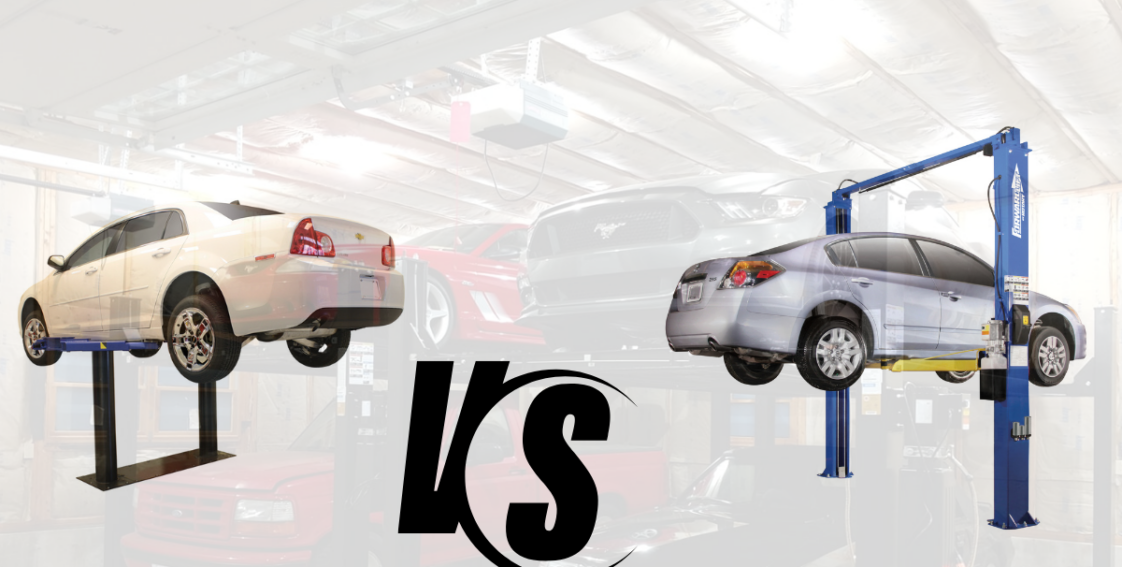
In-Ground Versus Two-Post Lifts: Which Is Best for Your Bay Layout?
An automotive lift is arguably the most important investment for a shop. If you’re exploring options, purchasing and installation costs are important, but there are other points you need to consider, too.
For example, the type of lift you choose affects productivity and efficiency, can determine or restrict the type of repair work carried out, and can increase or reduce shop capacity.
Given that the type of lift chosen and installed can have a significant impact on overall financial performance, selection starts by considering what you intend to use it for. Define the intended application, and let this drive the selection process.
In-Ground Lifts
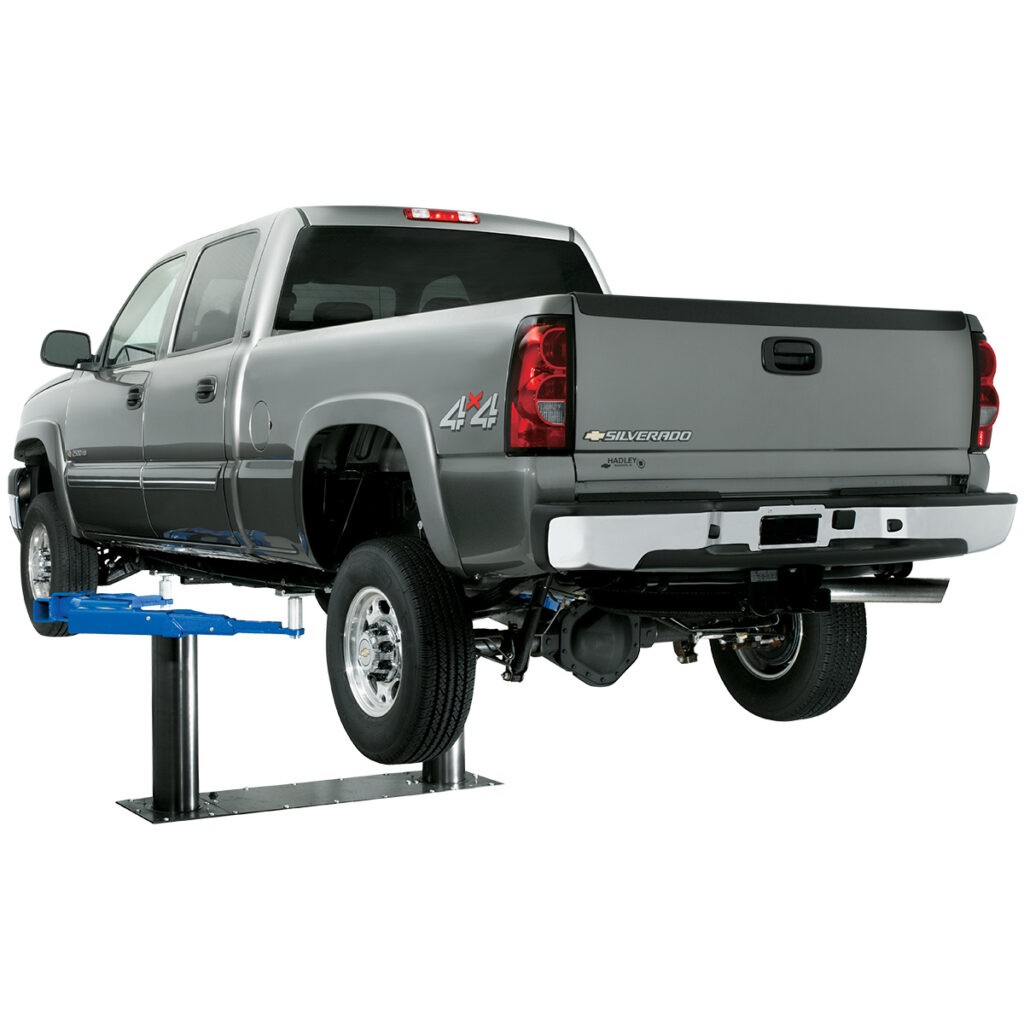
In-ground lifts, as the name suggests, are installed below ground. In this design, all that’s visible are two pads flush with the floor. The vehicle is positioned between these pads. Then, hydraulic cylinders positioned vertically beneath the pads extend to raise the vehicle.
In-ground lifts typically have a maximum capacity of 10,000 to 12,000 pounds. Higher-capacity versions feature a fore-aft layout with two cylinders that lift the vehicle front and rear together, offering a capacity of around 70,000 pounds. Keep in mind that capacity varies by model and manufacturer.
Advantages
- Keeps the shop area free of vertical pillars
- Vehicle doors can be opened fully
- Can allow closer bay spacing than is possible with traditional two-post lifts
- Creates a cleaner, less cluttered floor than two-post designs
Limitations
- Requires deep holes in the floor to create space for the cylinders
- Expensive to install
- Can’t be repositioned if needs change
- Technicians may struggle to center vehicles between the pads
Best Use Cases
- Repair shops requiring flexibility in how space is used (absence of posts means interior work can be done in the same bay)
- Shops performing high-volume work (tire shops, for example), where the absence of pillars allows technicians to get work done faster
- Shops requiring a clean, professional appearance (such as for servicing high-end vehicles where customers can see in)
Two-Post Lifts
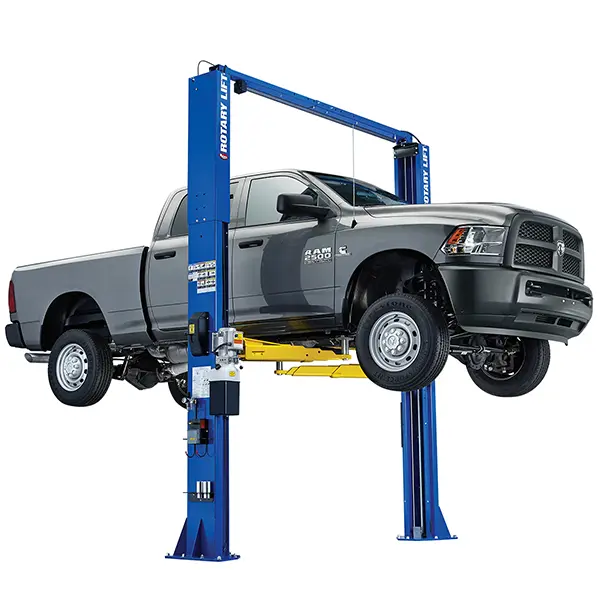
With two-post lifts, the vehicle is driven between a pair of floor-mounted vertical posts, which are linked by an overhead bar or rail. The arms that are attached to each post are moved under the vehicle and raised to contact the support points. Then, the vehicle is raised to give technicians underbody access.
Two-post lifts are available with capacities up to 20,000 pounds.
Advantages
- Posts are visible for vehicle positioning
- Doesn’t require costly floor modifications (but concrete must be strong enough for the loads)
- Can be moved to a new position if the workload or shop needs change
- Less expensive than in-ground lifts
Limitations
- Posts restrict access to vehicle interiors
- Posts can slow the movement of technicians
- Need enough spacing between lifts for workflow
- Requires enough vertical space for the posts to fit
Best Use Cases
- Shops where the focus is on underbody work (suspensions, transmissions, exhausts, etc.)
- Situations where a lift might need to be moved
- When budget is a primary concern
- Where a quick installation is a priority
Everything Is Application-Specific: How to Decide

When assessing the merits of an in-ground versus two-post lift, it’s the way you intend using the equipment that will determine which is most appropriate.
Do You Need a Permanent or Temporary Solution?
An in-ground lift requires excavation. After the lift is installed, relocation is almost impossible. When opting for an in-ground, you need to be certain you’ve chosen the right bay layout because you’re going to be stuck with it.
Comparatively, a two-post lift, while less elegant to look at, can be moved with relatively little effort. Go this route if the type of work being done changes, so that the lift can be moved to suit the new needs.
Do You Have Limited Clearance?
A two-post lift will generally need around 14’ of floor-to-ceiling or roof beam clearance to provide room for the cross-piece that links the two vertical posts. Keep in mind that some lower-clearance models are available, and taller versions also exist for larger vehicles.
In contrast, an in-ground lift only needs enough vertical space to raise the vehicle to a height where it can be worked on (typically 11 to 12’, although this type of lift can be used where the ceiling is lower).
What Is Your Budget?
An in-ground lift costs more to buy and install than a two-post lift. However, if the additional space around the vehicle, as well as the opportunity for tighter bay spacing, increases productivity and revenue, there may be a payback from choosing in-ground.
Can You Spare Downtime?
Installation for an in-ground lift is significantly more complex and takes much longer than a two-post lift installation. If you need additional lift capacity in a hurry, the two-post may be the better choice. However, if you’re building a new workshop or service center, this can be a good opportunity to install in-ground lifts during construction.
Do You Need 360° Access?
An advantage of in-ground lifts is easier access to the vehicle interior. In a small shop, this can increase flexibility, allowing tasks like detailing or interior repair work to be performed in the same bay as suspension, brakes, and other underbody work. However, if there’s room to move the vehicle to a different bay for this type of activity, access while on the lift may not be a priority.
Get Product Recommendations From Allied, Inc.
When making an important decision like a lift purchase, it helps to work with a dependable automotive equipment distributor. Located in Michigan, Allied, Inc. is one of the largest automotive lift suppliers in the United States and has over five decades of industry experience.
We provide reliable automotive equipment, including lifts, air compressors, wheel service equipment, and more, to repair shops and service centers across the United States. We even provide installation and inspection services to local shops in Michigan and northern Ohio.
Visit our website to browse available lifts, or contact us today for product recommendations and guidance.